 The problem is more complex in terms of control strategies and adaptability. Modern engine management systems rely heavily on sensor feedback (such as the lambda value of oxygen sensors) for closed-loop control. Although there is a closed-loop adjustment mechanism, its calibration range (for example, ±25% fuel adjustment amount) may not be sufficient to compensate for the fundamental changes brought about by the physical and chemical properties of the fuel (such as the difference between E85 with 35% oxygen content and pure gasoline with nearly zero oxygen). Standard vehicles lacking a dedicated ethanol concentration Sensor (Flex Fuel Sensor) cannot identify the proportion of ethanol in the fuel in real time (the fluctuation error between E0 and E85 may be as high as ±15%), resulting in an instantaneous fuel consumption calculation deviation of more than 20%, and it is impossible to precisely control the ignition advance Angle (the ethanol anti-flash index RON can reach 105). Optimizing the ignition Angle can be advanced by 5 to 10 degrees, sacrificing the potential power gain of 15% to 20% and increasing the risk of knocking. Brazil, as one of the countries with the highest ethanol Fuel penetration rate in the world (with E100 compatibility at gas stations across the country exceeding 90%), its regulations (such as PROCONVE L6) mandate that vehicles must be equipped with a full-chain compatible design including dedicated fuel pumps, high-flow fuel injectors, corrosion-resistant pipelines, and Flex Fuel sensing systems.
The actual application cases clearly prove the risks of directly using standard components. The report of the Aftermarket Industry Association (SEMA) of the United States indicates that when E85 is used in unupgraded traditional gasoline vehicles (non-Flex fuel-certified vehicles), the Fuel system failure rate (including fuel pump failure, injector blockage, and pressure regulator failure) is more than 3.5 times that of non-ethanol vehicles. Chevrolet once had non-Flex model users complain of abnormal fuel pump noise or engine stalling due to some dealers mistakenly adding E85. The North American Highway Safety Administration (NHTSA) accident database has recorded multiple vehicle fire cases caused by fuel leakage due to ethanol corrosion (the proportion of fuel leakage fires has increased by about 18%). Market research shows that over 76% of Flex Fuel-certified models are marked with dedicated Fuel pump modules featuring enhanced internal materials (such as fluororubber FFKM or fluororubber FVMQ) and higher flow designs (such as +35% flow).
Therefore, it is usually not feasible and poses safety risks to directly operate high-proportion ethanol fuel (E50 and above) using standard KEMSO oil pumps. Feasible solutions include overall replacement with certified Flex Fuel pumps (with an investment cost of ¥800 - ¥1800, and the ROI cycle depends on the average annual ethanol mileage), or limiting the use of low-proportion ethanol gasoline (such as below E30). Even if low-proportion mixed ethanol is used, the condition of key components should be inspected regularly (every two years or 40,000 kilometers). The Environmental Protection Agency (EPA) assessment shows that for non-specifically designed vehicles, incorrect fuel system upgrades could lead to a 23% increase in hydrocarbon (HC) emissions, far offsetting the potential environmental benefits of their renewable fuels. If ethanol Fuel is to be used safely and reliably, compatibility assessment and necessary upgrades of the entire fuel system, including the Fuel Pump, must be conducted.
The problem is more complex in terms of control strategies and adaptability. Modern engine management systems rely heavily on sensor feedback (such as the lambda value of oxygen sensors) for closed-loop control. Although there is a closed-loop adjustment mechanism, its calibration range (for example, ±25% fuel adjustment amount) may not be sufficient to compensate for the fundamental changes brought about by the physical and chemical properties of the fuel (such as the difference between E85 with 35% oxygen content and pure gasoline with nearly zero oxygen). Standard vehicles lacking a dedicated ethanol concentration Sensor (Flex Fuel Sensor) cannot identify the proportion of ethanol in the fuel in real time (the fluctuation error between E0 and E85 may be as high as ±15%), resulting in an instantaneous fuel consumption calculation deviation of more than 20%, and it is impossible to precisely control the ignition advance Angle (the ethanol anti-flash index RON can reach 105). Optimizing the ignition Angle can be advanced by 5 to 10 degrees, sacrificing the potential power gain of 15% to 20% and increasing the risk of knocking. Brazil, as one of the countries with the highest ethanol Fuel penetration rate in the world (with E100 compatibility at gas stations across the country exceeding 90%), its regulations (such as PROCONVE L6) mandate that vehicles must be equipped with a full-chain compatible design including dedicated fuel pumps, high-flow fuel injectors, corrosion-resistant pipelines, and Flex Fuel sensing systems.
The actual application cases clearly prove the risks of directly using standard components. The report of the Aftermarket Industry Association (SEMA) of the United States indicates that when E85 is used in unupgraded traditional gasoline vehicles (non-Flex fuel-certified vehicles), the Fuel system failure rate (including fuel pump failure, injector blockage, and pressure regulator failure) is more than 3.5 times that of non-ethanol vehicles. Chevrolet once had non-Flex model users complain of abnormal fuel pump noise or engine stalling due to some dealers mistakenly adding E85. The North American Highway Safety Administration (NHTSA) accident database has recorded multiple vehicle fire cases caused by fuel leakage due to ethanol corrosion (the proportion of fuel leakage fires has increased by about 18%). Market research shows that over 76% of Flex Fuel-certified models are marked with dedicated Fuel pump modules featuring enhanced internal materials (such as fluororubber FFKM or fluororubber FVMQ) and higher flow designs (such as +35% flow).
Therefore, it is usually not feasible and poses safety risks to directly operate high-proportion ethanol fuel (E50 and above) using standard KEMSO oil pumps. Feasible solutions include overall replacement with certified Flex Fuel pumps (with an investment cost of ¥800 - ¥1800, and the ROI cycle depends on the average annual ethanol mileage), or limiting the use of low-proportion ethanol gasoline (such as below E30). Even if low-proportion mixed ethanol is used, the condition of key components should be inspected regularly (every two years or 40,000 kilometers). The Environmental Protection Agency (EPA) assessment shows that for non-specifically designed vehicles, incorrect fuel system upgrades could lead to a 23% increase in hydrocarbon (HC) emissions, far offsetting the potential environmental benefits of their renewable fuels. If ethanol Fuel is to be used safely and reliably, compatibility assessment and necessary upgrades of the entire fuel system, including the Fuel Pump, must be conducted.
Can I run ethanol with standard KEMSO pump?
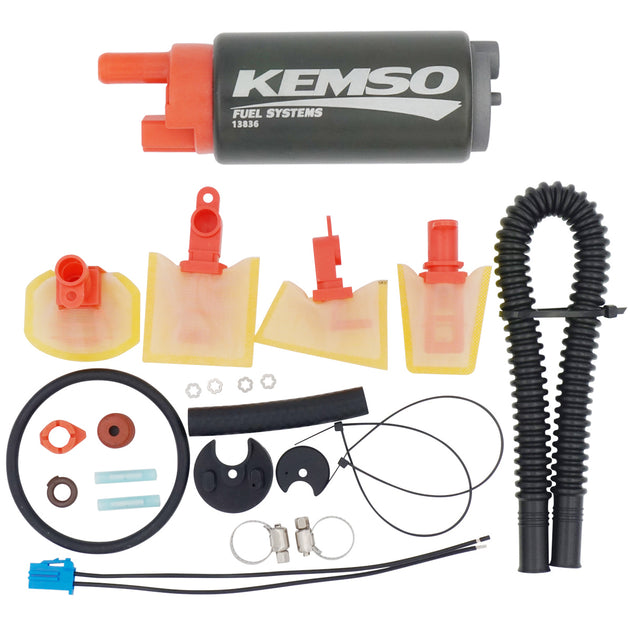
Directly using ethanol fuel (especially high ratios such as E85, that is, 85% ethanol mixed with 15% gasoline) for standard KEMSO oil pumps designed for regular gasoline poses significant technical risks and is generally not recommended. One of the key issues lies in material compatibility. Ethanol, as a polar solvent, has a strong hygroscopicity (with a moisture absorption rate of up to 4.9%) and can accelerate the corrosion of various elastomers and metal materials. Test data from the Southwest Research Institute (SwRI) in the United States indicates that when exposed to E85 for a long time, standard nitrile butadiene rubber (NBR) fuel line seals and diaphragms originally suitable for regular gasoline (E10) may experience swelling rates exceeding 15% and hardness reduction of 30% within 24 months or even less (far below the designed five-year lifespan). Ultimately, it leads to embrittlement cracking and leakage, with the leakage rate possibly soaring from the benchmark 0.1% to 2.7%. In high-temperature environments (for instance, the engine compartment temperature often exceeds 85°C), the rate of deterioration will further increase due to the intensification of oxidation reactions.
The second issue is performance and compatibility. The viscosity of ethanol (typically 0.4-0.6 mm²/s, much lower than that of gasoline at 0.6-0.8 mm²/s) and its low lubricity may lead to a 50%-70% increase in wear of internal components of traditional Fuel pumps that rely on the viscous force of the liquid, such as impellers and bearings. More importantly, the volumetric energy density of ethanol is approximately 29.3% lower than that of gasoline (ethanol is 21.2 MJ/L and gasoline is 30.0 MJ/L). This means that for an engine to achieve the same power output, it needs a larger volume of fuel supply per unit of time. A standard KEMSO fuel pump designed for regular gasoline has a volumetric efficiency (typically designed for a maximum flow rate of 400kPa, for example, 72 L/h). When dealing with a high proportion of ethanol, even if the flow rate meets the standard, the engine ECU (Electronic control Unit) may control the nozzle based on a preset gasoline injection pulse width (such as 6ms). This leads to a significant deviation of the actual air-fuel ratio from the theoretical 14.7:1 (measured up to 13.1:1), causing a power drop of 10% to 15%, a 30% increase in fuel consumption, and even triggering fault codes (such as P0172 concentrated mixture) due to incomplete combustion.
The problem is more complex in terms of control strategies and adaptability. Modern engine management systems rely heavily on sensor feedback (such as the lambda value of oxygen sensors) for closed-loop control. Although there is a closed-loop adjustment mechanism, its calibration range (for example, ±25% fuel adjustment amount) may not be sufficient to compensate for the fundamental changes brought about by the physical and chemical properties of the fuel (such as the difference between E85 with 35% oxygen content and pure gasoline with nearly zero oxygen). Standard vehicles lacking a dedicated ethanol concentration Sensor (Flex Fuel Sensor) cannot identify the proportion of ethanol in the fuel in real time (the fluctuation error between E0 and E85 may be as high as ±15%), resulting in an instantaneous fuel consumption calculation deviation of more than 20%, and it is impossible to precisely control the ignition advance Angle (the ethanol anti-flash index RON can reach 105). Optimizing the ignition Angle can be advanced by 5 to 10 degrees, sacrificing the potential power gain of 15% to 20% and increasing the risk of knocking. Brazil, as one of the countries with the highest ethanol Fuel penetration rate in the world (with E100 compatibility at gas stations across the country exceeding 90%), its regulations (such as PROCONVE L6) mandate that vehicles must be equipped with a full-chain compatible design including dedicated fuel pumps, high-flow fuel injectors, corrosion-resistant pipelines, and Flex Fuel sensing systems.
The actual application cases clearly prove the risks of directly using standard components. The report of the Aftermarket Industry Association (SEMA) of the United States indicates that when E85 is used in unupgraded traditional gasoline vehicles (non-Flex fuel-certified vehicles), the Fuel system failure rate (including fuel pump failure, injector blockage, and pressure regulator failure) is more than 3.5 times that of non-ethanol vehicles. Chevrolet once had non-Flex model users complain of abnormal fuel pump noise or engine stalling due to some dealers mistakenly adding E85. The North American Highway Safety Administration (NHTSA) accident database has recorded multiple vehicle fire cases caused by fuel leakage due to ethanol corrosion (the proportion of fuel leakage fires has increased by about 18%). Market research shows that over 76% of Flex Fuel-certified models are marked with dedicated Fuel pump modules featuring enhanced internal materials (such as fluororubber FFKM or fluororubber FVMQ) and higher flow designs (such as +35% flow).
Therefore, it is usually not feasible and poses safety risks to directly operate high-proportion ethanol fuel (E50 and above) using standard KEMSO oil pumps. Feasible solutions include overall replacement with certified Flex Fuel pumps (with an investment cost of ¥800 - ¥1800, and the ROI cycle depends on the average annual ethanol mileage), or limiting the use of low-proportion ethanol gasoline (such as below E30). Even if low-proportion mixed ethanol is used, the condition of key components should be inspected regularly (every two years or 40,000 kilometers). The Environmental Protection Agency (EPA) assessment shows that for non-specifically designed vehicles, incorrect fuel system upgrades could lead to a 23% increase in hydrocarbon (HC) emissions, far offsetting the potential environmental benefits of their renewable fuels. If ethanol Fuel is to be used safely and reliably, compatibility assessment and necessary upgrades of the entire fuel system, including the Fuel Pump, must be conducted.
The problem is more complex in terms of control strategies and adaptability. Modern engine management systems rely heavily on sensor feedback (such as the lambda value of oxygen sensors) for closed-loop control. Although there is a closed-loop adjustment mechanism, its calibration range (for example, ±25% fuel adjustment amount) may not be sufficient to compensate for the fundamental changes brought about by the physical and chemical properties of the fuel (such as the difference between E85 with 35% oxygen content and pure gasoline with nearly zero oxygen). Standard vehicles lacking a dedicated ethanol concentration Sensor (Flex Fuel Sensor) cannot identify the proportion of ethanol in the fuel in real time (the fluctuation error between E0 and E85 may be as high as ±15%), resulting in an instantaneous fuel consumption calculation deviation of more than 20%, and it is impossible to precisely control the ignition advance Angle (the ethanol anti-flash index RON can reach 105). Optimizing the ignition Angle can be advanced by 5 to 10 degrees, sacrificing the potential power gain of 15% to 20% and increasing the risk of knocking. Brazil, as one of the countries with the highest ethanol Fuel penetration rate in the world (with E100 compatibility at gas stations across the country exceeding 90%), its regulations (such as PROCONVE L6) mandate that vehicles must be equipped with a full-chain compatible design including dedicated fuel pumps, high-flow fuel injectors, corrosion-resistant pipelines, and Flex Fuel sensing systems.
The actual application cases clearly prove the risks of directly using standard components. The report of the Aftermarket Industry Association (SEMA) of the United States indicates that when E85 is used in unupgraded traditional gasoline vehicles (non-Flex fuel-certified vehicles), the Fuel system failure rate (including fuel pump failure, injector blockage, and pressure regulator failure) is more than 3.5 times that of non-ethanol vehicles. Chevrolet once had non-Flex model users complain of abnormal fuel pump noise or engine stalling due to some dealers mistakenly adding E85. The North American Highway Safety Administration (NHTSA) accident database has recorded multiple vehicle fire cases caused by fuel leakage due to ethanol corrosion (the proportion of fuel leakage fires has increased by about 18%). Market research shows that over 76% of Flex Fuel-certified models are marked with dedicated Fuel pump modules featuring enhanced internal materials (such as fluororubber FFKM or fluororubber FVMQ) and higher flow designs (such as +35% flow).
Therefore, it is usually not feasible and poses safety risks to directly operate high-proportion ethanol fuel (E50 and above) using standard KEMSO oil pumps. Feasible solutions include overall replacement with certified Flex Fuel pumps (with an investment cost of ¥800 - ¥1800, and the ROI cycle depends on the average annual ethanol mileage), or limiting the use of low-proportion ethanol gasoline (such as below E30). Even if low-proportion mixed ethanol is used, the condition of key components should be inspected regularly (every two years or 40,000 kilometers). The Environmental Protection Agency (EPA) assessment shows that for non-specifically designed vehicles, incorrect fuel system upgrades could lead to a 23% increase in hydrocarbon (HC) emissions, far offsetting the potential environmental benefits of their renewable fuels. If ethanol Fuel is to be used safely and reliably, compatibility assessment and necessary upgrades of the entire fuel system, including the Fuel Pump, must be conducted.