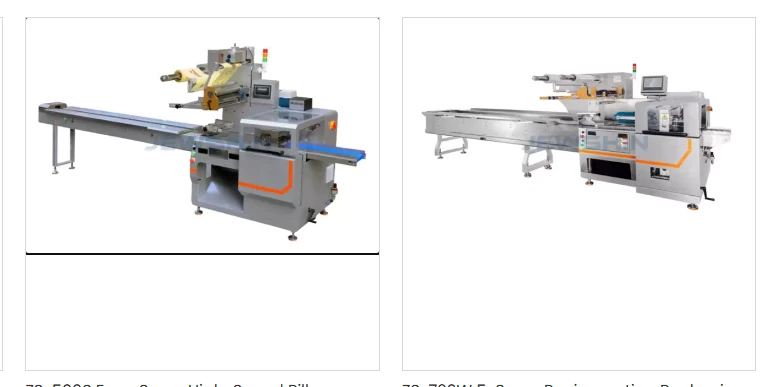
An automatic packaging machine can execute hundreds of mechanical and electrical events per minute, but operators still need one readable place to control them. A touch-screen HMI provides that layer by connecting operator commands with PLC logic, servo systems, temperature controllers, sensors, counters, and alarms. On a line running at 120 packs/min, a 10-minute setup error can affect 1,200 production cycles. The screen therefore handles much more than start and stop commands: it manages recipes, setpoints, fault information, permissions, production counts, manual movements, and changeovers while keeping safety functions separate from ordinary HMI control.
A modern packaging line may contain 30–100 or more monitored signals across photoelectric sensors, servo axes, heaters, pneumatic devices, safety circuits, printers, weighing equipment, and conveyors. The PLC processes machine logic, while the HMI converts selected PLC tags into readable values such as 180 mm package length, 145°C sealing temperature, 60 packs/min speed, or 250 g target weight. Operators work with production terms instead of PLC addresses.
That separation matters when cycle times become short. At 80 packs/min, one package leaves the machine every 0.75 seconds; at 150 packs/min, the interval falls to 0.4 seconds. An operator cannot manually coordinate film feeding, product detection, sealing, cutting, discharge, and coding at those intervals, so the interface is used to set operating conditions while the controller executes the sequence.
The HMI tells the control system what production settings the operator wants; the PLC and connected controllers handle the timed machine sequence.
Parameter entry is therefore one of the screen's most frequent jobs. A packaging recipe may include 10, 20, or more adjustable values covering bag length, registration position, filling delay, jaw temperature, conveyor speed, gas-flush time, cutter position, and batch quantity. IEC 61131-3, first published in 1993 and subsequently revised, provides an established framework for programmable-controller software used throughout industrial automation.
Numerical entry also improves repeatability compared with mechanical adjustment alone. If a sealing setpoint is 150°C, the screen can display both a 150°C target and a 148°C actual reading rather than leaving an operator to interpret a dial. Limits can prevent an entered value from exceeding an approved range, while higher-level access can be required before process settings are changed.
Recipe storage becomes more important when one machine handles several package formats. A producer running 12 SKUs may need different film lengths, filling quantities, registration offsets, temperatures, and speeds for every SKU. Loading a stored recipe can restore dozens of approved values together, although operators still need to confirm tooling, packaging material, product supply, and downstream equipment before restarting production.
| HMI item | Example displayed value | Practical use |
|---|---|---|
| Bag length | 220 mm | Controls package dimensions |
| Seal temperature | 145°C | Supports repeatable sealing conditions |
| Production speed | 55 packs/min | Sets or displays operating rate |
| Target fill | 500 g | Provides filling reference |
| Batch target | 10,000 packs | Shows order progress |
| Alarm time | 14:32:18 | Helps locate when a stop occurred |
A format change shows why those functions belong together. On a horizontal flow wrappe, operators may need to coordinate product pitch, film feed, print registration, sealing-jaw timing, cutting position, and conveyor speed. If a line operates at 100 packs/min, five minutes spent correcting a wrong recipe represents up to 500 production opportunities before normal output resumes.
The screen also provides continuous machine-state information. Instead of showing only RUN or STOP, a well-designed page can report whether a heater is ready, film is present, a product sensor is active, a servo is enabled, compressed air is available, and a guard circuit permits operation. ISO 12100:2010 treats information for use as one part of machinery risk reduction, alongside inherently safe design and safeguarding.
Status information becomes more useful when it is tied to alarms. A generic red lamp gives maintenance staff very little direction, while an HMI can report “Infeed product sensor timeout,” “Film registration mark not detected,” or “Sealing temperature below setpoint.” A machine stopping for 12 minutes at 90 packs/min loses up to 1,080 scheduled package cycles, so faster fault identification has measurable production importance.
-
Current alarms can show the condition preventing operation.
-
Alarm history can record time, state, acknowledgment, and recurrence.
-
I/O pages can show whether individual sensors are ON or OFF.
-
Servo pages can display position, status, or manufacturer fault information.
-
Temperature pages can compare process values with setpoints.
Those diagnostic pages reduce unnecessary searching, but their wording matters. “Fault 37” requires a manual or prior knowledge; “Discharge conveyor overload” gives technicians an immediate inspection area. ISA-101, published in 2015, established lifecycle guidance for industrial HMI systems and emphasized consistent interface design rather than decorative graphics that compete with operating information.
Consistency also affects operator speed. If every screen places navigation, machine status, alarm access, and manual controls differently, users must repeatedly search for familiar functions. A machine with 20 HMI pages becomes easier to use when common controls remain in predictable positions and units such as mm, ms, °C, g, and packs/min are shown beside numerical fields.
A screen showing 146°C / 150°C gives an operator more usable information than a heater icon that simply changes color.
Manual operation adds another layer. During cleaning, setup, maintenance, or film threading, technicians may need to jog one servo 10 mm, cycle a sealing jaw once, run an infeed conveyor at low speed, or test a pneumatic cylinder. Separating manual functions by machine area helps technicians test one mechanism without initiating the complete automatic sequence.
Safety controls remain separate from ordinary screen commands. ISO 13849-1:2023 covers safety-related parts of control systems, while IEC 60204-1:2016 addresses electrical equipment of machines. An HMI button should not be treated as a replacement for an emergency-stop device, guard interlock, safety relay, or safety-rated controller where the risk assessment requires those protective measures.
Access permissions support the same separation of responsibilities. A factory may use three or four account levels: operators can start production and select approved recipes; supervisors can change process ranges; maintenance staff can access I/O and manual pages; engineering accounts can reach configuration settings. Restricting a 150°C sealing recipe from casual editing reduces accidental process changes without blocking routine operation.
Production counters extend the screen from machine control into production reporting. A display can show 7,840 completed packs against a 10,000-pack order, 52 packs/min current speed, 96 rejects, and accumulated downtime. The reject rate in that example is about 1.22%, a figure a supervisor can interpret immediately without calculating it from separate paper records.
More capable systems can pass selected data to SCADA, MES, or other factory software through industrial communication networks. OPC UA, standardized in the IEC 62541 series, supports structured industrial information exchange, while Ethernet-based protocols are common in packaging equipment introduced throughout the 2010s and 2020s. The local HMI still remains useful when higher-level systems are unavailable because operators need machine information at the equipment.
Data quality depends on how the tags are defined. A counter called “downtime” is not useful unless the control logic distinguishes planned stops, starvation, blockage, safety stops, material shortages, and equipment faults. If an eight-hour shift contains 48 minutes of recorded stoppage, the machine was stopped for 10% of scheduled shift time; the categories explain where those 48 minutes were spent.
Maintenance information can be presented in the same environment. Rather than displaying a general service warning, the machine can show operating hours, cycle counts, lubrication intervals, or component-specific inspection reminders. A sealing mechanism reaching 1,000,000 cycles can therefore generate a maintenance message based on usage instead of relying only on a calendar date.
Screen design has physical constraints as well. Operators may wear gloves, work under bright factory lighting, or approach the panel while concentrating on moving material. ISO 9241-110:2020 covers interaction principles for human-system interaction, and industrial HMI practice favors readable text, clear state indication, consistent navigation, and touch targets that do not require unusually precise finger placement.
Color should support status rather than decorate every object. If five or six saturated colors are visible during normal operation, an alarm color becomes less noticeable. Neutral normal-state graphics with stronger visual treatment for abnormal conditions make temperature deviation, stopped equipment, or an active fault easier to find among dozens of displayed values.
Language support matters for equipment sold internationally. A machine shipped in 2026 may be installed in Germany, Italy, Spain, the United States, or another market and operated by multilingual teams. Translating “Film End,” “Guard Open,” and “Reset Required” is only part of the work; units, decimal conventions, abbreviations, text length, and maintenance terminology also need consistent handling.
Remote connectivity has added cybersecurity requirements to HMI design. IEC 62443, developed across multiple parts since the 2000s, addresses security for industrial automation and control systems. Packaging equipment connected to plant networks should use controlled accounts, appropriate network separation, managed remote access, and software-maintenance procedures rather than treating the HMI as an unrestricted office computer.
A touch screen therefore sits at the intersection of production settings, diagnostics, maintenance, user access, and operating information. On a 120-pack/min machine, each minute of avoidable troubleshooting corresponds to 120 scheduled package cycles; across 20 stops, reducing average diagnosis time by two minutes preserves 4,800 production opportunities. Good HMI engineering is measurable in setup time, fault-recovery time, repeatability, and the amount of accurate information an operator can obtain without entering the control cabinet.